Sunday, September 8, 2019

5.7 Innovation, Design, and Marketing Specifications

5.7
Innovation, Design, and Marketing Specifications
Designers must establish clear parameters for a marketing specification in order to create unique and creative solutions to a problem. Designers need to collect valid and useful data from the target market and audience throughout the design cycle to ensure the specification includes certain essential components.

Target markets
Target Market When determining the target market, the market sectors and segments need to be identified. Target markets can be separated by the following aspects:


  • Geographic For example, their addresses, location, climate, region
  • Demographic / Socioeconomic For example, their gender, age, income, occupation, education, household size, and stage in the family life cycle
  • Psychographic For example, similar attitudes, values, and lifestyles
  • Behavioral For examples, a person's relationship to a product (occasions or degrees of loyalty)
Market segments table:


Target audiences
Target audience A specific group of people within the target market at which a product or the marketing message of a product is aimed at. 


Image result for difference between target market and target audience
Target market relates to the sectors and segments, whereas a target audience is a specific group of people within the target market.

Market analysis
Market Analysis An appraisal of economic viability of the proposed design from a market perspective, taking into account fixed and variable costs and pricing. It is typically a summary about potential users and the market.

Economic Viability An activity that can support itself financially - it can be applied to any economic unit, from a single project, to a business, to a country.

Fixed Costs Are not dependent on the level of goods or services produced by the business. They tend to be time-related, such as salaries or rent and they are often referred to as overhead costs.

User Need A marketing specification should identify the essential requirements that the product must satisfy in relation to the market and user need.

Competition
A thorough analysis of competing designs is required to establish the market need.


Every product you take to market, even ones that are new inventions or improvements on old products, face competition. This is because customers buy products for many different reasons. Some are interested in the innovation of new products, others care more about price point and clever marketing schemes. Your competition will capitalize on these buyer preferences and seek to edge out your product from the market. Identifying the competition in your marketing specification helps the organization to clarify how it can edge out and respond to the competition.


  • Measuring against an existing product to evaluate competitiveness
Designers will often evaluate their products against an existing 'benchmark' - most often a product that is seen as being dominant or having the minimum required features needed in order to be successful 

  • To check compliance with national or international standards
Many products will fall under national or international standards. Although these standards are not usually mandatory, consumers will want and expect their products to meet the standards. Products that do not meet standards are unlikely to gain success in the marketplace.


Research methods
There is a range of research methods, and these include:

Literature Search This is performed using authoritative sources such as: academic journals, books, theses, consumer magazines, government agency, industry publications, etc.

User Trials This method is a trial where members of the community who will use the product are observed using the product - usually in a lab environment and participants have set tasks to perform under controlled conditions.

User Research The questioning of users about their experience using a product - can be a questionnaire or focus group.

Expert Appraisal Where an expert (chosen on the basis of their knowledge or experience) is asked to give their opinion.

Performance Testing This method tests the physical attributes of a product and tests it against different criteria.

Design Specifications
A design specification relates to the requirements of a product and details aspects of:

  1. Aesthetic requirements
  2. Cost constraints
  3. Customer requirements
  4. Environmental requirements
  5. Size constraints
  6. Safety considerations
  7. Performance requirements and constraints
  8. Materials requirements
  9. Manufacturing requirements

5.6 Roger's Characteristics

5.6
Rogers' Characteristics
Rogers’ four main elements that influence the spread of new ideas (innovation, communication channels, time and a social system) rely heavily on human capital. The ideas must be widely accepted in order to be self- sustainable. Designers must consider various cultures and communities to predict how, why and at what rate new ideas and technology will be adopted.

ROGERS' THEORY OF DIFFUSION OF INNOVATION attempts to identify and explain the factors that lead to people and groups adopting innovations (new ideas and technologies).

Diffusion and innovation
Diffusion The wide acceptance and sale of a product or innovation

Diffusion of innovations is a theory that seeks to explain how, why and at what rate new ideas and technology will spread through cultures. The innovation must be widely adopted in order to self-sustain. 

Research elements of diffusion

  1. Innovation - the new object or product designed
  2. Communication channels - the way the message moves from one to another
  3. Time - The innovation-decision period is the length of time required to pass through the innovation-decision process
  4. Social systems - a set of interrelated units that are engaged in joint problem-solving to accomplish a common goal.


The impact of Rogers’ characteristics on consumer adoption of an innovation
“In general, innovations that are perceived as having relative advantages, being more compatible, less complex, observable, and trialable will diffuse more rapidly than other innovations. In general, innovations that are perceived as having relative advantages, being more compatible, less complex, observable, and trialable will diffuse more rapidly than other innovations.” 

Rogers' five characteristics that impact on consumer adoption of an innovation are:

  • Relative Advantage How improved an innovation is over the previous generation
  • Compatibility The level of compatibility that an innovation has to be assimilated into an individual's life
  • Complexity If the innovation is perceived as complicated or difficult to use, an individual is unlikely to adopt it 
  • Observability The extent that an innovation is visible to others. An innovation that is more visible will drive communication among the individual's peers and personal networks and will, in turn, create more positive or negative reactions.
  • Trialability How easily an innovation may be explored; if a user is able to test an innovation, the individual will be more likely to adopt it.

Each of these factors have their own respective impacts on the consumer adoption of an innovation. It could be either the presence or absence of a certain quality that reduces or increases the likelihood of consumers accepting the product.

Social roots of consumerism
Consumerism A social and economic order and ideology that encourages the acquisition of goods and services in ever-greater amounts. Consumerism is sometimes used in referenece to the anthropological and biological phenomena of people purchasing goods and consuming materials in excess of their basic needs.

" A paradigm shift in the experience of shopping "

Influence of social media on diffusion of innovation:
Social media connects people around the world quickly and with ease - and this connectivity drives and relays the message across the world and can lead to increased desires or impulses to buy certain things. This could be due to the advertisements or recognition of new products and therefore people are more likely to try out . anew product. (using social media to raise brand awareness)

The impact of Roger's Characteristics on Consumer Adoption of an Innovation

Innovators are the first individuals to adopt an innovation

Early adopters are the second fastest category to adopt an innovation

Early majority the third group tends to take more time to consider adopting new innovations and is inclined to draw from feedback from early adopters before taking the risk of purchasing new products/ systems

Late majority adopts the innovation after it has been established in the marketplace and is seldom willing to take risks with new innovation

Laggards are the last to adopt an innovation - they tend to prefer traditions and are unwilling to take risks.


Monday, September 2, 2019

5.5 Product Life Cycle

Product Life Cycle
Designers need to consider the whole product cycle of potential products, services and systems throughout the design cycle and beyond. Products may have an impact not only on the direct consumer but also on society at large and the environment.

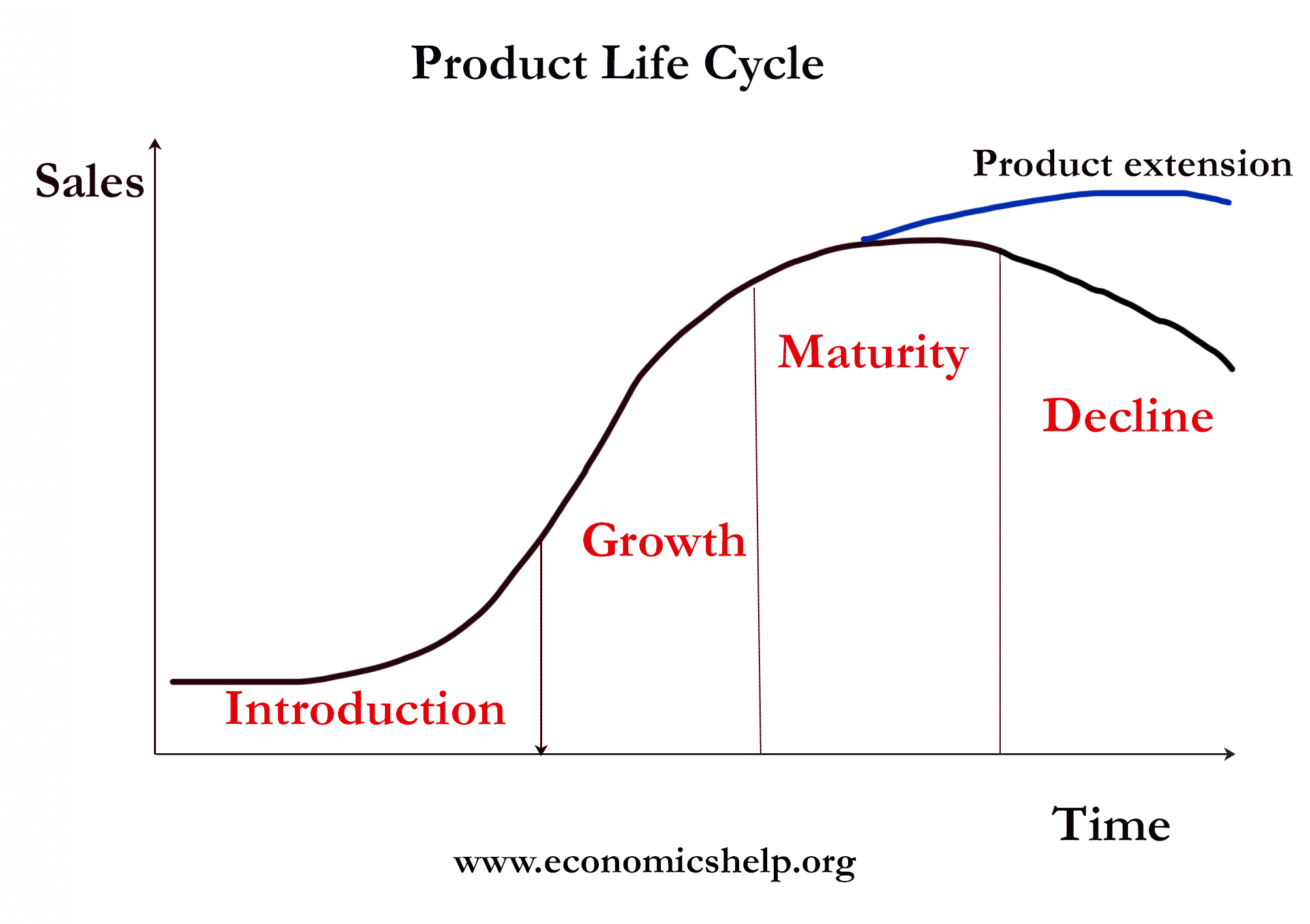
Product Life Cycle: A description of the presence or behaviours of a product in the marketplace over time. 


Key Stages of the Product Life Cycle
Image result for product life cycle


Innovation and the continuous development of new and improved products are key to the design process. Product life cycle is a business technique that attempts to list the stages in the lifespan of commercial/consumer products. Such stages include;

Launch (Introduction Phase) With any new product or service you must introduce it to the marketplace. It is necessary to launch the product with the right image and at the right price. It is also important to have adequate infrastructure to support this product - poor distribution can mean problems in the future. TO introduce a new product to the marketplace will require significant investment.

Growth Phase Once your product has survived the introduction phase it will need to grow; it is at this stage it is hoped that sales and profits grow to desirable levels.

Maturity Phase The profit revenue from the product is falling and price reductions are necessary in order to remain competitive. It is likely that your customer base is as wide as it will go.

Decline Phase Falling sales means that customers are exhausting the product cycle and it is in decline, possibly due to market decline. This can translate to a product extension however (instead of a decline) with marketing strategies such as a relaunch or modification in design.


Obsolescence
Obsolescence is the process of becoming obsolete or outdated and no longer used. Below are the four main reasons behind why obsolescence occurs;

Planned Obsolescence / Built-in Obsolescence A product becomes outdated as a conscious act either to ensure a continuing market or to ensure that safety factors and new technologies can be incorporated into later versions of the product. [artificially limited product lifespan in hopes of return purchases]. It has moral implications not only on the consumer but also on excessive, unnecessary environmental waste.
Image result for lightbulb obsolescenceImage result for ink cartridge

Style (fashion) Fashions and trends change over time, which can result in a product no longer being desirable (undesirability of old fashioned items). However, as evidenced by the concept of retro styling and the cyclic nature of fashion, products can become desirable again. Products can be redesigned whilst maintaining its technical specifications to cater to the market.
Image result for evolution of style

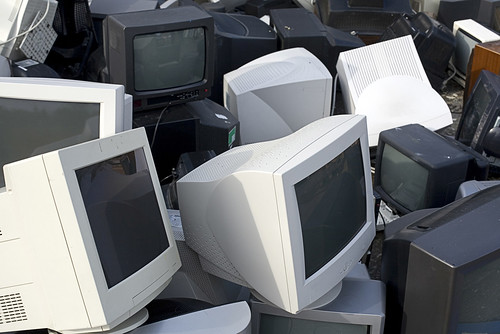
Functional Over time, products wear out and break down. If parts are no longer available, the product can no longer work in the way it originally did. Also, if a service vital to its functioning is no longer available, it can become obsolete. 
Image result for functional obsolescence tv


Technological When a new technology supersedes an existing technology, the existing technology quickly falls out of use and is no longer incorporated into new products. Consumers instead opt for the newer, more efficient technology in their products. It is a form of functional obsolescence due to the rapid pace of technological change - and one of the biggest causes for obsolescence.
Related image

Predictability of the Product Life Cycle
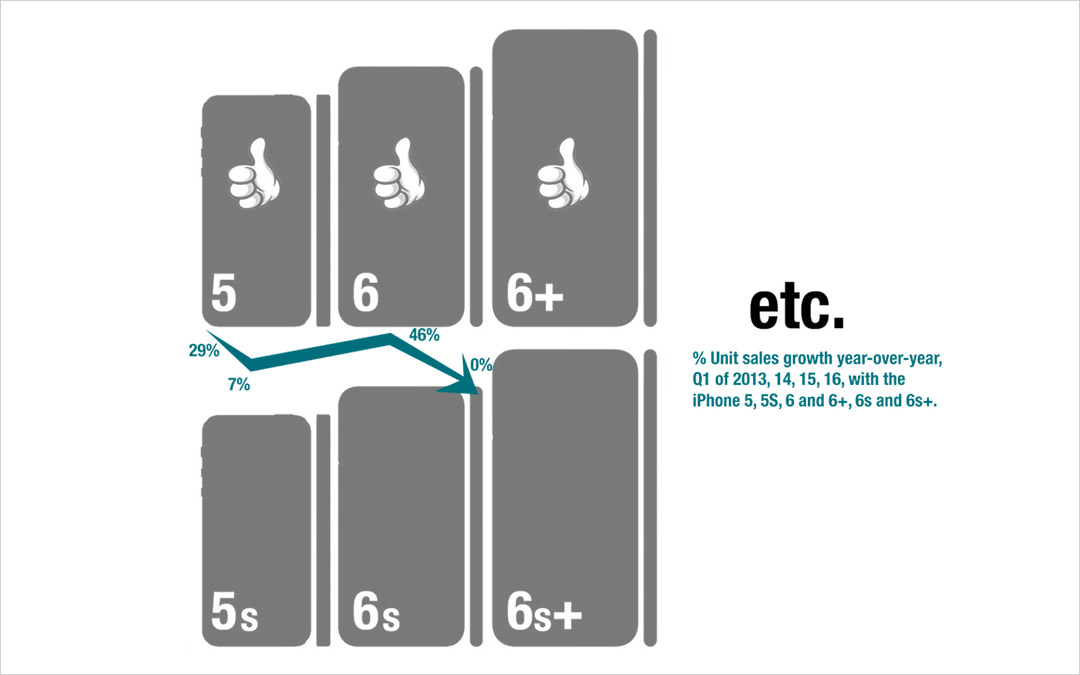
Predictability  The rate of technological advancement has given birth to very short product life cycles especially with technical products; you can expect something to get replaced every year, for example.

Image result for apple phones by year

Unpredictability While a product's life may be limited, it can be hard for manufacturers to product exactly how long it is likely to be, especially during the new product development phase. While most manufacturers are very good at making the best decisions based on the information they have, consumer demand can be unpredictable, which means they don't always get it right.

Product versioning Product versioning is a business practice in which a company produces different models of the same product, and then charges different prices for each model. Versioning a product gives the consumer the option of purchasing a higher valued model for more money or a lower valued model for less money. 


Product Versioning / Generations
Product Versioning is offering a range of products based on a core or initial product market segments.A company can maintain a pioneering strategy and consistent revenue flow by introducing new versions or generations of a product to a market. Apple uses this strategy effectively, creating multiple versions and generations of their iPod®, iPhone® and iPad® products.


Advantages:

  • Improved consumer choice: consumers can choose the version thats suits them.
  • Improved consumer choice: can choose a budget level such as Quicken tax software
  • Maximise profits for the company hopefully through increased sales.


Thursday, June 13, 2019

Trevor Baylis and Innovation

Trevor Baylis and his wind up radio 
Image result for trevor bayliss wind up radio

What were the drivers behind his innovation?
It has been said that many of his inventions were inspired from his time as a stuntmen - this line of work has made him friends that had suffered life changing injuries as a result of their work; and he wanted to change this and invent devices that would help people with disabilities in their everyday lives.

In terms of the clockwork radio specifically, he was driven by the lack of access to important health information to people African countries, which has lead to the spread of AIDS due to insufficient public awareness about the syndrome. His clockwork radio invention was in direct response to communicating this information to the people of Africa, where affordable energy is scarce or non-existent.

Why was his invention so useful/innovative?
His invention was useful and innovative as it helped many learn about overcoming the epidemic of AIDs in places where it lacked access to education. His invention was powered by muscle alone, and did not require any electricity or batteries to be powered, which made access to health education increasingly accessible to remote communities.

Illustration for article titled Trevor Baylis, Inventor of the Hand-Cranked Radio, Dies at 80Illustration for article titled Trevor Baylis, Inventor of the Hand-Cranked Radio, Dies at 80

How did Trevor encapsulate the role of the lone inventor?
Illustration for article titled Trevor Baylis, Inventor of the Hand-Cranked Radio, Dies at 80Trevor encapsulated the role of the lone inventor because he was committed to the invention of a novel product and often became isolated because he was engrossed and committed to his invention. He embodies the role of a lone inventor because people were initially hesitant to produce and manufacture his product, which is a demonstration of resistance to the lone inventor.


Was his product a commercial success?
The clockwork radio had a difficult startup because it was rejected by many companies for manufacture on the notions that it was 'not right' and 'unsuitable for development'. However, Trevor overcame this by staying committed to the innovation of the product and persisted, hoping that someone would take interest in his idea. In 1994, Christopher Staines offered a potential partnership that lead to full production and a factory in South Africa. Here, Christopher can be seen as one of the most important people in the commercialization process - and that is a product champion.

Africa has a population of some 600 million people and radio is recognised as one of the most popular and accessible ways of spreading information.  

Eel Pie IslandWhat issues/mistakes did he make regarding patents?The wording of the original patents [when they were filed] weren't comprehensive enough to deter infringers, many of which didn't care about the IP that inventions had. The patent law didn't protect his design entirely, and the company that he partnered up with tweaked his design which has caused people to benefit from his design and invention opposed to him getting the profits. Just a slight change in the product design helps larger companies get around the patent, which caused him to get little profit from his invention. 

Baylis argued that the British legal system failed to protect inventors, leaving them open to exploitation not only from imitators, but venture capitalists, lawyers, and other in the commercial business world. 

Thursday, May 16, 2019

5.4: Stakeholders in Invention and Innovation

5.4
Stakeholders in Invention and Innovation
Essential idea: There are three key roles in invention and innovation, which can be shared by or more people.


The Inventor, the Product Champion, the Entrepreneur
Inventor
The lone inventor is an individual working outside or inside an organization who is committed to the invention of a novel product and often becomes isolated because he or she is engrossed with ideas that imply change and are resisted by others.

They are:
  • Individuals with a goal of the complete invention of a new and somewhat revolutionary product
  • Have ideas that are completely new and different
  • May not comprehend or give sufficient care to the marketing and sales of there product.

  • Are usually isolated, and have no backing towards their design.
  • Are having a harder time to push forward their designs, especially in a market where large investments are required for success.
  • Are often resisted by other employees and workers

Product Champion
The product champion is an influential individual, usually working within an organization, who develops enthusiasm for a particular idea or invention and 'champions' it within the organization.

Entrepreneur 
The entrepreneur is an influential individual who can take an invention to market, often by financing the development, production, and diffusion of a product into the marketplace.

The Inventor as a Product Champion and/or Entrepreneur
On occasion, the inventor is also the product champion and / or the entrepreneur. 

Effective design draws from multiple areas of expertise, and this can be utilized at different stages of product development. Most products are now extremely complex and rely on expertise from various disciplines. Most designs are developed by multidisciplinary team , such as modern products like smart-phones and printers.

It would be unlikely that a lone inventor would have the expertise in all the disciplines. 

A Multidisciplinary Approach to Innovation
Nowadays, most modern day designs are developed in multidisciplinary teams because of the varying types of skillsets required to design a product. Most products are now extremely complex and rely on expertise from various disciplines. 

Advantages

  1. Wide range of knowledge that others may not have considered
  2. Wide range of expertise and/or backgrounds that foster cross-fertilization of ideas
  3. Wide range of expertise means that products are designed from different perspectives.
Disadvantages
  1. May not want to share ideas for fear of losing ownership
  2. Individual may not be used to working in teams
  3. Different working styles and speed 
  4. Chance of miscommunication


5.3: Strategies for Innovation

5.3
Strategies for Innovation
Essential Idea: Innovation should always occur in context and a deep understanding of the culture as well as the behaviors, needs, and wants of the customers.

Act of Insight
An act of insight refers to a sudden insight or revelation, which suggests a solution, or the means of achieving a solution.

  • Often referred to as the “eureka moment”, a sudden image of a potential solution is formed in the mind, usually after a period of thinking about a problem
  • Examples include: Newton watching an apple fall and gaining insight in gravitation forces or DaVinci inventing a crane after watching workers trying to lift heavy stone from a boat.


Adaptation
Taking a technology, concept or system from one application and then applying to a new product is described as adaptation. Adapting or changing the application is common in design and is found in a number of high profile examples.

An existing technology or solution to a problem in one field is used to provide for a new idea for a solution in the other. 

Analogy
Taking the idea from one context to another, and applying its characteristics into product design. [an idea from one context is used to stimulate ideas for solving a problem in another context].

Sonars were modelled on how bats navigate.
Chance
Chance is defined to be an unexpected discovery that leads to a new idea. For example, Velcro was developed when a chap walking with his dog found lots os seed pods stuck to his socks and dog. He looked under the microscope and made his discovery of the pods having many little hooks.

Velcro Close Up

Technology Transfer
Transfer is where a technology, manufacturing process, or material is transferred to another field to provide the basis for an invention. Earlier we saw how laser technology, originally thought to have few practical uses, was transferred to a variety of different applications including surgery, welding and cutting metal, bar-code readers, and audio CDs.

Transfer is where a technology, manufacturing process or material is transferred to another field to provide the basis for an invention.

Market Pull
When the market influences product design - designers often produce ideas for products in response to market forces. This is also called consumer pull. Market influences include a demand from consumers for a new product, or a competitor releasing a new product that impacts an organization's market share, thus the need for a response. 

Technology Push
Scientific research leads to advances in technology that underpin new ideas
Image result for technology push innovation
Products may be re-designed because of the changes in materials, technology, or manufacturing methods. This is called technology push. Manufacturers will push their new product to market hoping that consumers will want to adapt the new technology.

Thursday, May 2, 2019

5.2: Innovation

5.2
Innovation
Essential Idea: There are many different types of innovation, which is not to be confused with inventions - innovation is a product that is effectively communicated and introduced to the market. Innovation can be described as the creation of new devices, objects, ideas, or procedures useful in completing human objectives. The process of invention is invariably preceded by one or more discoveries that help the inventor solve the problem at hand.

Invention and Innovation

The act or the business of putting an invention in the marketplace and making it a success. The products that we consider as innovative should make a real difference.

Innovation is the process of discovering a principle; a technical advance in a particular field often resulting in a novel product. For example, credit for invention has frequently been claimed for someone who conceived an idea, but the inventor is the person who not only had the idea but also worked out the method of putting it into practice. The innovator is the one that revolutionizes the market by introducing something new.


Categories of Innovation

Reasons why few inventions become innovations
For an innovation to occur, something more than the generation of a creative idea is required. The idea must be put into action to a genuine difference to the human condition, resulting in the improvement of a product, a system, or environmental change. an innovation is a useful application of invention or discovery.

The idea must be put into action and be diffused into the market place.


Diffusion: The market diffusion process describes how an innovation spreads through a market. It is the process by which a new idea or new product is accepted by the market. 


Marketability

Low product demand or not readily saleable

Financial support

There is little financial backing from the organization or from outside sources

Marketing 

Advertising, shipping, storing and selling

Need 

Whether there is good reason or demand for the product eg. energy devices

Price

Value for money, cost compared to its usefulness

Resistance to change

Does the product challenge routine or feeling of comfort

Risk 

Is there a level of uncertainty about the financial/time investment in relation to the function and performance of the innovation?

Sustaining Innovation
Sustaining ideas have to do with improving the current product by developing generations 2,3,4,5, and so on until the product reaches the end of its life cycle. Normally large companies are very good at creating sustaining innovations because their resources, business processes, and cultures are setup in a way to enable sustaining efforts.

1. Feature fixes/Additions
Most next generation products will come with a handful of fixes and/or new features that address previous gripes with the first generation products.

2. Cost Reductions
As sales volumes grow for a product, the cost of purchasing raw materials for that product decline in addition to design enhancement that simplify the product or enable it to use less expensive materials.

2. Product Line Expansions 
At launch, most new products don't have a full suite of products to meet each end-user segment's needs and as a fix for that companies will fill out their product line by offering additional sizes, colors, etc.


Image result for apple sustaining innovation
Quality of the product will increase 

Sustaining: Incremental value gain over existing solutions available to users.

Disruptive Innovation
Disruptive innovations are the sort of big ideas that many of us have in mind when we think about an innovation. They are called disruptive because they disrupt the current market behavior, rendering existing solutions obsolete, transforming value propositions, and bringing previously marginal customers and companies into the center of attention. 

The iPod, which radically changed the way we listen to music, is one success of disruptive innovation and isn't about winning a technology race, but about delivering innovations aimed at a set of customers whose needs are being ignored by industry leaders. A disruptive innovation trades off performance along one dimension for performance along another, such as simplicity, convenience, ability to customize, or price.

Disruptive innovation attempts to consist of off-the-shelf components put together in a product architecture that was often simpler than prior approaches.

Process Innovation
A process innovation is the implementation of a new or significantly improved production or delivery method. This includes significant changes in techniques, equipment, and/or software.

Process innovations change the way that products are built, and can also focus on the processes through which products are created or delivered (for example, for a relief setting). It is about making the process efficient and convenient, helping businesses arrive at the best ideas for commercialization.

Architectural Innovation
Architectural innovation is the distinction between the product as a whole, the products in its parts, and its components. Architectural innovation changes the outside of the product/the house of the product whilst keeping the inside the same. It reconfigures the linkages between the components of established products in new ways while leaving the core design elements untouched.

Innovations that change the architecture a product without changing its components.

Architectural innovation destroys the usefulness of a firm's architectural knowledge but preserves the usefulness of its knowledge about the product's components. A component is defined as a physically distinct portion of the product that embodies a core design concept and performs a well-defined function.

Modular Innovation
Modular innovation is where you maintain the architecture of a product and modify the modules within the product. For instance, adding more interfaces to enhance the functionality/features to a smart phone so that each product is customized for its individual users. 

Configurational Innovation
Configuration design is a kind of innovation where a fixed set of predefined components that can be connected in predefined ways is given, and an assembly of components selected from this fixed set is sought that satisfies a set of requirements and obeys a set of constraints.

The associated design configuration problem consists of the following three constituent tasks:
1. Selection of components,
2. Allocation of components,
3. Interfacing of components (design of the ways the components interface/connect with each other)

Innovation Strategies for Markets: Diffusion and Suppression
Diffusion of innovations is a theory that seeks to explain how, why, and at what rate new ideas and technology spread through cultures. Diffusion takes place once the product, system, or service is adopted. Adoption of an innovation runs through a hierarchy of groups of potential users.

Diffusion occurs through a five-step decision making process. It occurs through a series of communication channels over a period of time among the members of a similar social system. Rogers five stages of diffusion are:

  • knowledge 
  • persuasion
  • decision
  • implementation
  • confirmation
Distribution.png
The stages by which a person adopts an innovation, and whereby diffusion is accomplished, include awareness of the need for an innovation, decision to adopt (or reject) the innovation, initial use of the innovation to test it, and continued use of the innovation. 

Suppression or delayed adoption of an innovation in the early years of its availability when it may compete with a dominant design. There are factors that can delay widespread sales , including the companies that are currently providing technology and products that might be threatened by a newcomer, like telegraph companies faced with the telephone. 

3.3 Physical Modelling

3.3 Physical Modelling Essential Idea: A physical model is a three-dimensional, tangible representation of a design or system Designers ...