Thursday, June 13, 2019

Trevor Baylis and Innovation

Trevor Baylis and his wind up radio 
Image result for trevor bayliss wind up radio

What were the drivers behind his innovation?
It has been said that many of his inventions were inspired from his time as a stuntmen - this line of work has made him friends that had suffered life changing injuries as a result of their work; and he wanted to change this and invent devices that would help people with disabilities in their everyday lives.

In terms of the clockwork radio specifically, he was driven by the lack of access to important health information to people African countries, which has lead to the spread of AIDS due to insufficient public awareness about the syndrome. His clockwork radio invention was in direct response to communicating this information to the people of Africa, where affordable energy is scarce or non-existent.

Why was his invention so useful/innovative?
His invention was useful and innovative as it helped many learn about overcoming the epidemic of AIDs in places where it lacked access to education. His invention was powered by muscle alone, and did not require any electricity or batteries to be powered, which made access to health education increasingly accessible to remote communities.

Illustration for article titled Trevor Baylis, Inventor of the Hand-Cranked Radio, Dies at 80Illustration for article titled Trevor Baylis, Inventor of the Hand-Cranked Radio, Dies at 80

How did Trevor encapsulate the role of the lone inventor?
Illustration for article titled Trevor Baylis, Inventor of the Hand-Cranked Radio, Dies at 80Trevor encapsulated the role of the lone inventor because he was committed to the invention of a novel product and often became isolated because he was engrossed and committed to his invention. He embodies the role of a lone inventor because people were initially hesitant to produce and manufacture his product, which is a demonstration of resistance to the lone inventor.


Was his product a commercial success?
The clockwork radio had a difficult startup because it was rejected by many companies for manufacture on the notions that it was 'not right' and 'unsuitable for development'. However, Trevor overcame this by staying committed to the innovation of the product and persisted, hoping that someone would take interest in his idea. In 1994, Christopher Staines offered a potential partnership that lead to full production and a factory in South Africa. Here, Christopher can be seen as one of the most important people in the commercialization process - and that is a product champion.

Africa has a population of some 600 million people and radio is recognised as one of the most popular and accessible ways of spreading information.  

Eel Pie IslandWhat issues/mistakes did he make regarding patents?The wording of the original patents [when they were filed] weren't comprehensive enough to deter infringers, many of which didn't care about the IP that inventions had. The patent law didn't protect his design entirely, and the company that he partnered up with tweaked his design which has caused people to benefit from his design and invention opposed to him getting the profits. Just a slight change in the product design helps larger companies get around the patent, which caused him to get little profit from his invention. 

Baylis argued that the British legal system failed to protect inventors, leaving them open to exploitation not only from imitators, but venture capitalists, lawyers, and other in the commercial business world. 

Thursday, May 16, 2019

5.4: Stakeholders in Invention and Innovation

5.4
Stakeholders in Invention and Innovation
Essential idea: There are three key roles in invention and innovation, which can be shared by or more people.


The Inventor, the Product Champion, the Entrepreneur
Inventor
The lone inventor is an individual working outside or inside an organization who is committed to the invention of a novel product and often becomes isolated because he or she is engrossed with ideas that imply change and are resisted by others.

They are:
  • Individuals with a goal of the complete invention of a new and somewhat revolutionary product
  • Have ideas that are completely new and different
  • May not comprehend or give sufficient care to the marketing and sales of there product.

  • Are usually isolated, and have no backing towards their design.
  • Are having a harder time to push forward their designs, especially in a market where large investments are required for success.
  • Are often resisted by other employees and workers

Product Champion
The product champion is an influential individual, usually working within an organization, who develops enthusiasm for a particular idea or invention and 'champions' it within the organization.

Entrepreneur 
The entrepreneur is an influential individual who can take an invention to market, often by financing the development, production, and diffusion of a product into the marketplace.

The Inventor as a Product Champion and/or Entrepreneur
On occasion, the inventor is also the product champion and / or the entrepreneur. 

Effective design draws from multiple areas of expertise, and this can be utilized at different stages of product development. Most products are now extremely complex and rely on expertise from various disciplines. Most designs are developed by multidisciplinary team , such as modern products like smart-phones and printers.

It would be unlikely that a lone inventor would have the expertise in all the disciplines. 

A Multidisciplinary Approach to Innovation
Nowadays, most modern day designs are developed in multidisciplinary teams because of the varying types of skillsets required to design a product. Most products are now extremely complex and rely on expertise from various disciplines. 

Advantages

  1. Wide range of knowledge that others may not have considered
  2. Wide range of expertise and/or backgrounds that foster cross-fertilization of ideas
  3. Wide range of expertise means that products are designed from different perspectives.
Disadvantages
  1. May not want to share ideas for fear of losing ownership
  2. Individual may not be used to working in teams
  3. Different working styles and speed 
  4. Chance of miscommunication


5.3: Strategies for Innovation

5.3
Strategies for Innovation
Essential Idea: Innovation should always occur in context and a deep understanding of the culture as well as the behaviors, needs, and wants of the customers.

Act of Insight
An act of insight refers to a sudden insight or revelation, which suggests a solution, or the means of achieving a solution.

  • Often referred to as the “eureka moment”, a sudden image of a potential solution is formed in the mind, usually after a period of thinking about a problem
  • Examples include: Newton watching an apple fall and gaining insight in gravitation forces or DaVinci inventing a crane after watching workers trying to lift heavy stone from a boat.


Adaptation
Taking a technology, concept or system from one application and then applying to a new product is described as adaptation. Adapting or changing the application is common in design and is found in a number of high profile examples.

An existing technology or solution to a problem in one field is used to provide for a new idea for a solution in the other. 

Analogy
Taking the idea from one context to another, and applying its characteristics into product design. [an idea from one context is used to stimulate ideas for solving a problem in another context].

Sonars were modelled on how bats navigate.
Chance
Chance is defined to be an unexpected discovery that leads to a new idea. For example, Velcro was developed when a chap walking with his dog found lots os seed pods stuck to his socks and dog. He looked under the microscope and made his discovery of the pods having many little hooks.

Velcro Close Up

Technology Transfer
Transfer is where a technology, manufacturing process, or material is transferred to another field to provide the basis for an invention. Earlier we saw how laser technology, originally thought to have few practical uses, was transferred to a variety of different applications including surgery, welding and cutting metal, bar-code readers, and audio CDs.

Transfer is where a technology, manufacturing process or material is transferred to another field to provide the basis for an invention.

Market Pull
When the market influences product design - designers often produce ideas for products in response to market forces. This is also called consumer pull. Market influences include a demand from consumers for a new product, or a competitor releasing a new product that impacts an organization's market share, thus the need for a response. 

Technology Push
Scientific research leads to advances in technology that underpin new ideas
Image result for technology push innovation
Products may be re-designed because of the changes in materials, technology, or manufacturing methods. This is called technology push. Manufacturers will push their new product to market hoping that consumers will want to adapt the new technology.

Thursday, May 2, 2019

5.2: Innovation

5.2
Innovation
Essential Idea: There are many different types of innovation, which is not to be confused with inventions - innovation is a product that is effectively communicated and introduced to the market. Innovation can be described as the creation of new devices, objects, ideas, or procedures useful in completing human objectives. The process of invention is invariably preceded by one or more discoveries that help the inventor solve the problem at hand.

Invention and Innovation

The act or the business of putting an invention in the marketplace and making it a success. The products that we consider as innovative should make a real difference.

Innovation is the process of discovering a principle; a technical advance in a particular field often resulting in a novel product. For example, credit for invention has frequently been claimed for someone who conceived an idea, but the inventor is the person who not only had the idea but also worked out the method of putting it into practice. The innovator is the one that revolutionizes the market by introducing something new.


Categories of Innovation

Reasons why few inventions become innovations
For an innovation to occur, something more than the generation of a creative idea is required. The idea must be put into action to a genuine difference to the human condition, resulting in the improvement of a product, a system, or environmental change. an innovation is a useful application of invention or discovery.

The idea must be put into action and be diffused into the market place.


Diffusion: The market diffusion process describes how an innovation spreads through a market. It is the process by which a new idea or new product is accepted by the market. 


Marketability

Low product demand or not readily saleable

Financial support

There is little financial backing from the organization or from outside sources

Marketing 

Advertising, shipping, storing and selling

Need 

Whether there is good reason or demand for the product eg. energy devices

Price

Value for money, cost compared to its usefulness

Resistance to change

Does the product challenge routine or feeling of comfort

Risk 

Is there a level of uncertainty about the financial/time investment in relation to the function and performance of the innovation?

Sustaining Innovation
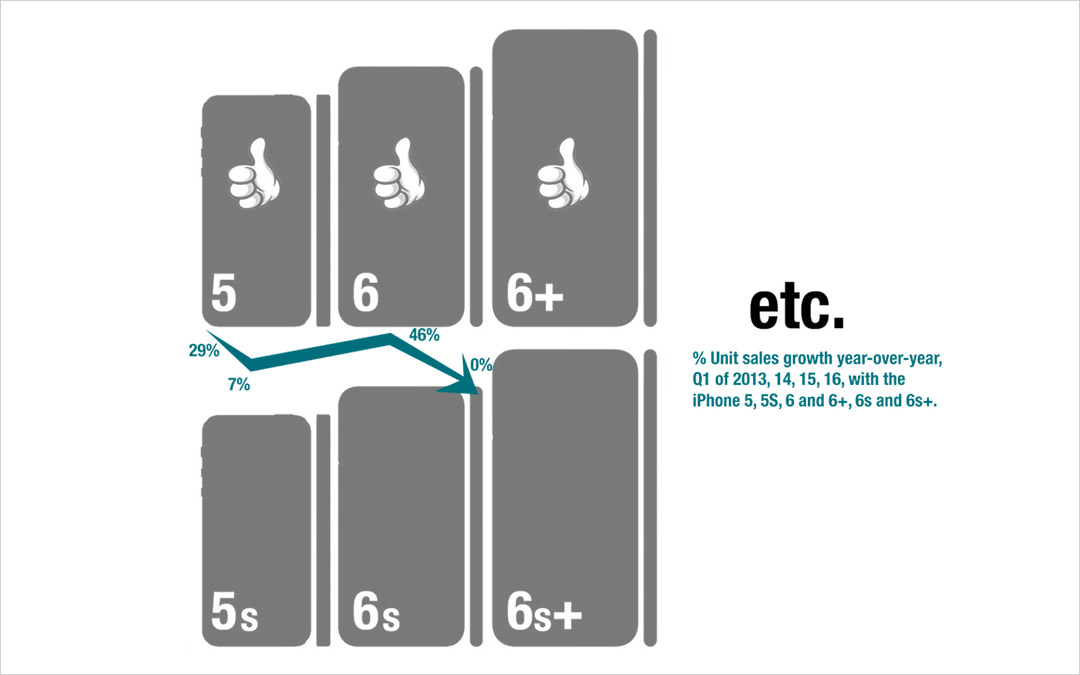
Sustaining ideas have to do with improving the current product by developing generations 2,3,4,5, and so on until the product reaches the end of its life cycle. Normally large companies are very good at creating sustaining innovations because their resources, business processes, and cultures are setup in a way to enable sustaining efforts.

1. Feature fixes/Additions
Most next generation products will come with a handful of fixes and/or new features that address previous gripes with the first generation products.

2. Cost Reductions
As sales volumes grow for a product, the cost of purchasing raw materials for that product decline in addition to design enhancement that simplify the product or enable it to use less expensive materials.

2. Product Line Expansions 
At launch, most new products don't have a full suite of products to meet each end-user segment's needs and as a fix for that companies will fill out their product line by offering additional sizes, colors, etc.


Image result for apple sustaining innovation
Quality of the product will increase 

Sustaining: Incremental value gain over existing solutions available to users.

Disruptive Innovation
Disruptive innovations are the sort of big ideas that many of us have in mind when we think about an innovation. They are called disruptive because they disrupt the current market behavior, rendering existing solutions obsolete, transforming value propositions, and bringing previously marginal customers and companies into the center of attention. 

The iPod, which radically changed the way we listen to music, is one success of disruptive innovation and isn't about winning a technology race, but about delivering innovations aimed at a set of customers whose needs are being ignored by industry leaders. A disruptive innovation trades off performance along one dimension for performance along another, such as simplicity, convenience, ability to customize, or price.

Disruptive innovation attempts to consist of off-the-shelf components put together in a product architecture that was often simpler than prior approaches.

Process Innovation
A process innovation is the implementation of a new or significantly improved production or delivery method. This includes significant changes in techniques, equipment, and/or software.

Process innovations change the way that products are built, and can also focus on the processes through which products are created or delivered (for example, for a relief setting). It is about making the process efficient and convenient, helping businesses arrive at the best ideas for commercialization.

Architectural Innovation
Architectural innovation is the distinction between the product as a whole, the products in its parts, and its components. Architectural innovation changes the outside of the product/the house of the product whilst keeping the inside the same. It reconfigures the linkages between the components of established products in new ways while leaving the core design elements untouched.

Innovations that change the architecture a product without changing its components.

Architectural innovation destroys the usefulness of a firm's architectural knowledge but preserves the usefulness of its knowledge about the product's components. A component is defined as a physically distinct portion of the product that embodies a core design concept and performs a well-defined function.

Modular Innovation
Modular innovation is where you maintain the architecture of a product and modify the modules within the product. For instance, adding more interfaces to enhance the functionality/features to a smart phone so that each product is customized for its individual users. 

Configurational Innovation
Configuration design is a kind of innovation where a fixed set of predefined components that can be connected in predefined ways is given, and an assembly of components selected from this fixed set is sought that satisfies a set of requirements and obeys a set of constraints.

The associated design configuration problem consists of the following three constituent tasks:
1. Selection of components,
2. Allocation of components,
3. Interfacing of components (design of the ways the components interface/connect with each other)

Innovation Strategies for Markets: Diffusion and Suppression
Diffusion of innovations is a theory that seeks to explain how, why, and at what rate new ideas and technology spread through cultures. Diffusion takes place once the product, system, or service is adopted. Adoption of an innovation runs through a hierarchy of groups of potential users.

Diffusion occurs through a five-step decision making process. It occurs through a series of communication channels over a period of time among the members of a similar social system. Rogers five stages of diffusion are:

  • knowledge 
  • persuasion
  • decision
  • implementation
  • confirmation
Distribution.png
The stages by which a person adopts an innovation, and whereby diffusion is accomplished, include awareness of the need for an innovation, decision to adopt (or reject) the innovation, initial use of the innovation to test it, and continued use of the innovation. 

Suppression or delayed adoption of an innovation in the early years of its availability when it may compete with a dominant design. There are factors that can delay widespread sales , including the companies that are currently providing technology and products that might be threatened by a newcomer, like telegraph companies faced with the telephone. 

Wednesday, April 24, 2019

5.1: Invention

5.1
Invention
Essential Idea: The protection of a novel idea of how to solve a problem is a major factor in commercial design.

Invention is the process of discovering a principle which allows a technical advance in a particular field that results in a novel/new product. Often, inventions solve problems of the real world. 

Drivers for Invention
Drivers for invention include personal motivation to express creativity or for personal interest, scientific or technical curiosity, constructive discontent, the desire to make money, or the desire to help others.

Expression of creativity / Personal interest
The inventor might have a personal motivation to invent - it could be out of personal interest (a tinkerer) or creative expression.


Constructive discontent
The inventor is not happy with an existing product, and aims to make it better.


Scientific or technical curiosity
Some inventors are just simply curious which leads them to invent new revolutionary items that require inquisitive scientific or technical thinking.


Desire to make money
For products and systems to develop, ie. further iterations, to evolve then the financial return will fund the research and development work to enable the designer to increase the amount of new inventions and innovations. 

Desire to help others
Some inventions are made to assist people and make life better; an example would be Illac Diaz and how he used a solar light made from old soda bottles to bring natural light into the homes of some of the poorest people in the Philippines.
Image result for illac diaz

The Lone Inventor
An individual working outside or inside an organization who is committed to the invention of a novel product and often becomes isolated.

The advantages and disadvantages of being a lone inventor;

An individual working outside or inside an organization who is committed to the invention of an original or novel product often becomes isolated because he/she is engrossed with ideas that imply change and are resisted by others. Designers/Engineers/Inventors such as James Dyson, Trevor Bayliss and Clive Sinclair fit this description of a 'lone inventor'. Nowadays, most products are made by teams of designers whom of which bring their own expertise and specialties to the table (multidisciplinary teams)


advantages and disadvantages


Intellectual Property (IP)
Intellectual property is a legal term used for intangible property such as creations of the mind, such as signs an inventions used in a commercial setting. Intellectual property is also protected by the law [legally recognized], and includes protection of inventions, designs, art, music, literature, etc.


  1. Owners are granted certain exclusive rights to a variety of intangible asssets such as musical, literary, and artistic works, discoveries and inventions, and words, phrases, sumbols, and designs.
  2. Common types of intellectual property rights include;
    1. Copyright
    2. Trademarks
    3. Patents
    4. Industrial Design Rights
    5. Trade Dress
    6. in some jurisdictions, Trade Secrets
  3. Why do people use intellectual property rights?
    1. Differentiating from competitors
    2. Selling or licensing to provide revenue streams
    3. Offering customers something new and different
    4. Marketing and branding
    5. Value as an asset 


Strategies for Protecting IP: Patents, Trademarks, Design protection, Copyright.
Patent pending
Image result for patent
Products are protected using patent pending.
An agreement from a government office to give someone the right to make or sell a new invention for a certain number of years. The expression 'patent pending' is a warning that inventors are entitled to use for their product or process once a patent application has been filed, but prior to the patent being issued.

Trademark
Image result for trademark
Company trademarks are recognizable by its design.
A trademark is a recognizable sign, design or expression which distinguishes products or services of a particular trader from the similar products or services of other traders. 

Copyright
Image result for copyright
Copyright is a legal right created by the law of a country that grants the creator of an original work exclusive rights to its use and distribution, usually for a limited time, with the intention of enabling the creator to receive compensation for their intellectual effort.

Registered trademark 


The essential function of a trademark is to exclusively identify the commercial source or origin of products or services. A trademark indicates a source or serves as a badge of origin. 


Service mark

Shelved Technologies
Reasons why some patented technologies are shelved

Cost effectiveness
The technology is available, but the cost of using it in products makes it too expensive for the consumer, eg. 3D printers for home use - although this is changing now. 

Social
Market is not ready for the change. For example, the football goal line technology (putting a chip in the football to see if it passed the goal line or not) but there is a lot of resistance to this technology; people don't want to technologize aspects of football.

Technological
The science and underpinning ideas have been developed, but technology is not resolved enough to introduce the product, for example, flexible phones.


Wednesday, March 13, 2019

1.1c: Physiological Factors

1.1c Physiological Factors
Essential idea: Designers consider physiological factors to ensure products meet ergonomic needs. Designers study physical characteristics to optimize the user's safety, health, comfort, and performance.

Physiological factor data
Physiological factor data is available to designers and collected to optimize the user's safety, health, comfort, and performance. Human factor data related to physical characteristics used to optimize the mentioned user characteristics.

A recap on human factor design - it considers the:

  • effectiveness (completeness and accuracy)
  • efficiency (speed and effort)
  • engagement (pleasantness and satisfaction)
  • error tolerance (error prevention and error recovery)
  • learnability (predictability and consistency)
it also considers which activities can be caried out and how human values quality of life, improved safety, reduced fatigue and stress, increased comfort levels and job satisfaction and are enhanced. 

As human beings, we get used to the way things are really fast. But for designers, the way thing are is an opportunity to make things better and improve the human condition.

Image result for physiological data
Physiological Factors
How is physiological factor data collected?
Using a wide range of methods, such as performance testing, user trials and observations, collection of anthropometric data, and etc.

Comfort and fatigue
Comfort: How pleasing it feels to use a product, is one of the first things a human will notice. If something is not pleasant to the touch, people will not want to touch it or ultimately use or operate it. Comfort is of primary concern to the designers. It determines how effective a design is and how well a human can interact with a product.

Physical comfort: Designers need to find innovative ways to increase the utility of a product. Making an item intuitive and comfortable to use will ensure its success in the marketplace. Physical comfort while using an item increases its utility.

Psychological comfort: Comfort in the human-machine interface is found in feedback. You have preconceived notions of certain things. A quality product should feel like it is made out of quality materials. If it is lightweight and flimsy you will not feel that comfortable using it.

Fatigue: a person's sense of physical or psychological tiredness that inform decisions, and can affect a person's performance. Fatigue is a consequence of some discomfort experienced by the user and can lead to a loss in productivity, loss in quality of outcome and a perception that the product has been poorly designed.


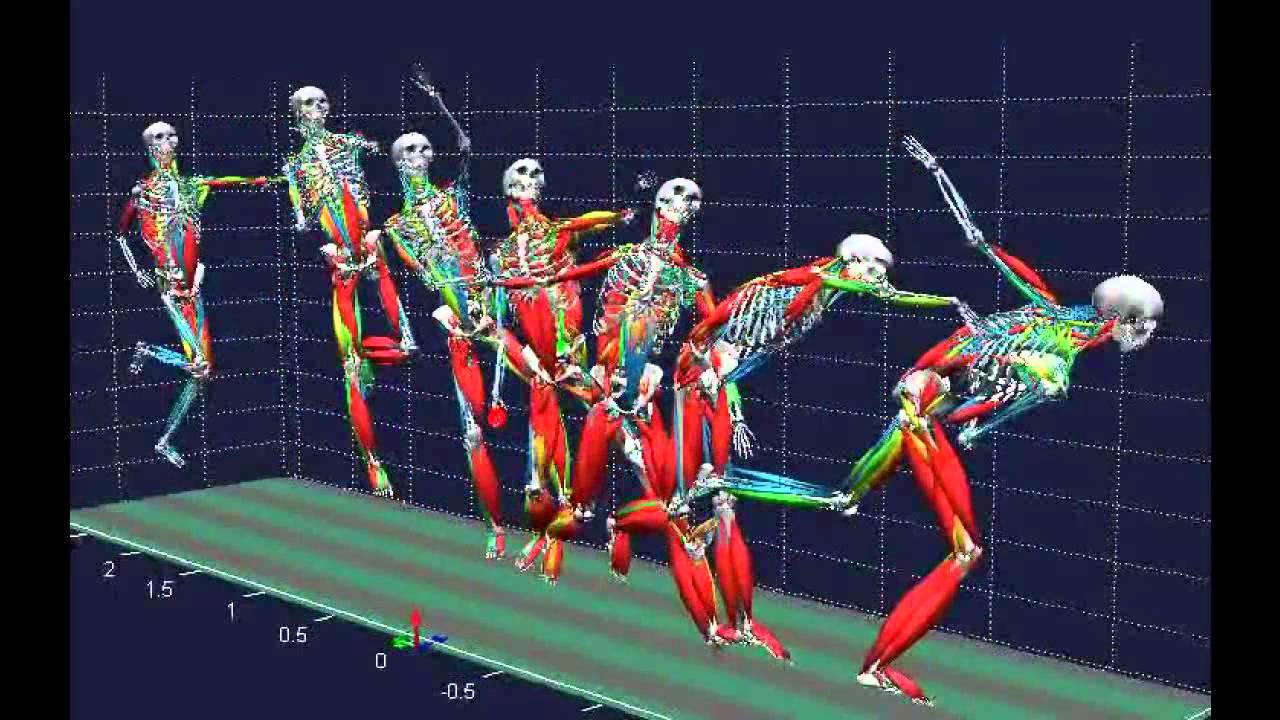
Biomechanics
Biomechanics relates to the mechanics of living organisms and includes research into the operation of muscles, joints, and tendons. Biomechanics in human factor design deals with four key criteria:

  1. Force - Excessive impact jolts the user's joints and causes the muscles to tense in response.
  2. Repetition - Many work tasks and cycles are repetitive in nature, and are frequently controlled by hourly or daily production targets and work processes. High task repetition, when combined with other risk factors such as high force and/or awkward postures, can contribute to the formation of musculoskeletal disorder (MSD). A job is considered to be highly repetitive if the cycle time is 30 seconds or less.
  3. Duration - Refers to continuous muscular effort. Even small exertions continuously held are as stressful to the human tissues.
  4. Posture - Posture refers to "the carriage of the body as a whole, the attitude of the body, or the position of the arms and the legs". It is the position in which you could hold your body upright against gravity while standing.
Image result for biomechanics

The importance of biomechanics to the design of different products considering muscle strength, age of user, user interface (surface texture,  handle size, etc) and torque.

- In a kitchen: viewing distances, pulling strength, lifting strength and turning strength.
- In a can opener, valve wheel, corkscrew, door handle, jam jar lid – torque becomes important.

Wednesday, March 6, 2019

1.1b: Psychological Factors

1.1b
Psychological Factors
Human beings vary psychologically in complex ways. Any attempt by designers to classify people into groups merely results in a statement of broad principles that may or may not be relevant to the individual. Design permeates every aspect of human experience and data pertaining to what cannot be seen such as touch, taste, and smell are often expressions of opinion rather than checkable fact.
The analysis of the human information processing system requires a designer to critically analyse a range of causes and effects to identify where a potential breakdown could occur and the effect it may have.

Methods of Collecting Psychological Data
Nominal Scales
Nominal scales are used for labelling variables without any quantitative value - they are simply named or labelled. All of these scales are mutually exclusive in the sense that there is no overlap and none of them have any numerical significance.
Nominal Scale
Example of Nominal Scale
Interval Scales
Interval scales are numeric scales in which we know not only the order, but the exact differences between the values. The classic example of an interval scale is Celsius temperature because the difference between each value is the same. 
Interval Scale
Interval Scale
Ordinal Scales
Ordinal scales place an importance on the order of the values on a scale. They are typically measures of non-numeric concepts like satisfaction, happiness, discomfort, etc.

Ordinal Scale
Example of Ordinal Scale
Ratio Scales
Ratio scales tell us the order, the exact value between units, and they also have an absolute zero - which allows for a wide range of both descriptive and inferential statistics to be applied.
Ratio Scale
Ratio Scale

Methods of Collecting Psychological Factor Data
  • Interviews
An interview involves asking people questions to find out about their experiences and attitudes. One problem of interviewing people is the concern of participants to tell the interviewer what they think is socially acceptable or desirable.
  • Surveys or questionnaires
These require subjects to read questions and mark their answers. Some psychologists observe behavior and mental processes by administering standardized tests.
  • Observation
  • Standardised tests
  • Case Studies

3.3 Physical Modelling

3.3 Physical Modelling Essential Idea: A physical model is a three-dimensional, tangible representation of a design or system Designers ...