Saturday, January 26, 2019

Examples of Classic Designs

  • Choose two products that you consider to be classic designs.
  • Write a sentence or two why you consider it to be classic - using the 6 headings: image / status / obsolescence / mass production / omnipresence / dominant design
  • Include images
Apple Macintosh
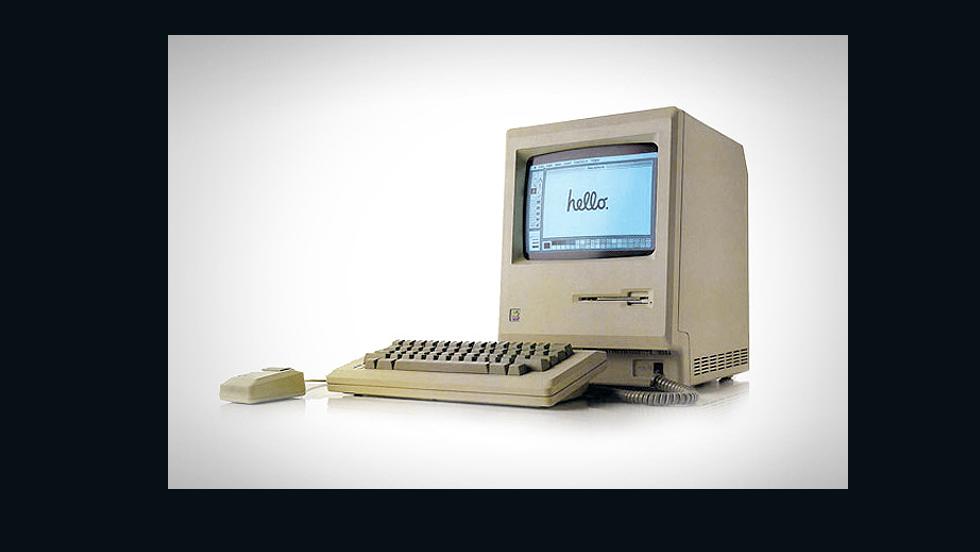
"When Apple Mac said hello to the world in 1984 it turned the computing industry on its head," says Dick Powell, co-founder of design agency SeymourPowell. "It seamlessly combined outstanding software and hardware into an experience. Other than the Jobs-less years it spent in the innovation wilderness, it's still doing it."
The first Apple Mac is an example of a iconic and classical design, because it was the first of its kind and has an omnipresence in the computer technology industry. Many other versions have taken inspiration from this design, and is a dominant design as it is highly practical - there is a mouse, a keyboard, and a screen. Its characteristics make the design highly practical and creates the fundamentals of a computer.

Post-it notes
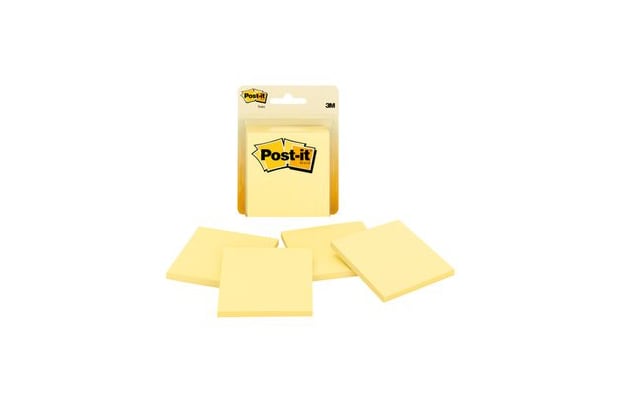
Post-it notes are another example of classical design -its ability to be a removable yet adhesive piece of writing stationary was the first of its kind to be introduced. It has a simple design quality that can be mass-produced and is used in various types of environments, like schools, offices, and many other places. Its image in itself is also an indicator of classic design - the product carries itself.


Thursday, January 17, 2019

4.5: Production Systems

4.5 Production Systems
The development of increasingly sophisticated production systems is transforming the way products are made.

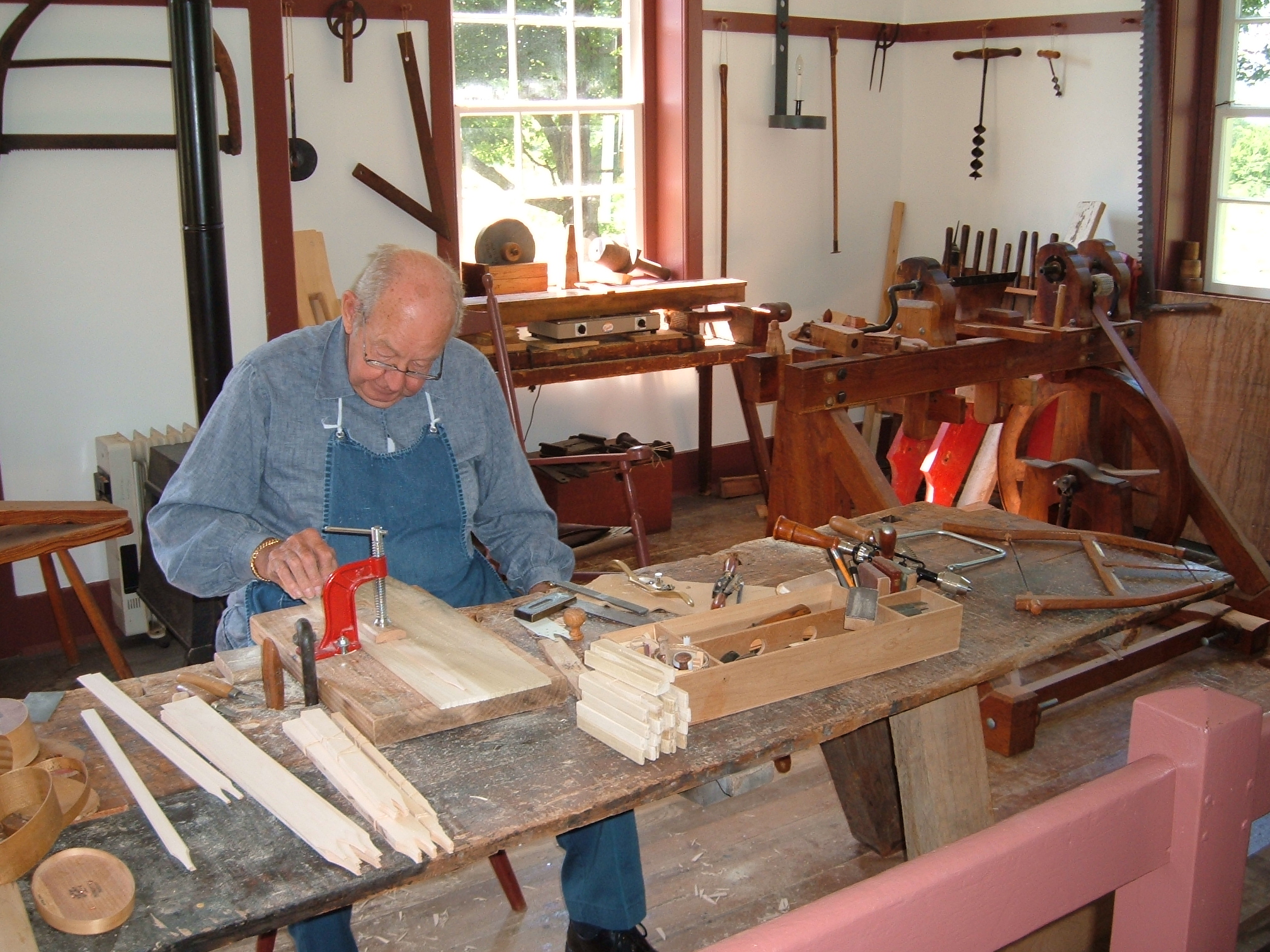
Craft production
Craft-production is a small-scale production process centered on manual skills. This type of production makes a single, unique, product form start to finish. The product is mostly based on the requirements of the customer. 


Related image
A Craftsman at work

  1. Craft production tends to be labor intensive and often highly skilled labor is required.
  2. Is a small scale production process


Mechanized production
Mechanized production is a volume production process involving machines controlled by humans. In other words, machinery is used to carry out some or all of the repetitive tasks in a production process.

  1. May involve using jigs and templates to ensure quality control,
  2. Using conveyor belts to control the rate of production and to keep components flowing from one process to the next.


Automated production
The term automation refers to a wide variety of systems and processes that operate with little or no human intervention. In most automation systems, control is exercised by the system itself, through control devices that sense changes in conditions.
Image result for automated production
Automated Assembly

  1. A volume production process involving machines controlled by computers.


Assembly line production
Assembly line production is the mass-production of a product via a flow line based on the interchangeability of parts, pre-processing of materials, standardization and work division.

  1. Each manufacturing task is divided up into basic stages.
  2. Each stage is carried out using specialist labor and equipment
  3. A flow line (like a conveyor belt) moves each part from one stage to the next. This controls the rate of production
This makes each individual task repetitive. The benefit to the consumer is cheaper products.


Mass customization
Mass customization is a production process that combines elements of mass production with those of bespoke tailoring. products are adapted to meet a customer's individual needs, so no two items are the same.

For example, Nike ID allows customers to customize their Nike clothing and footwear before buying: 
Image result for nike id
Customizing shoes on NikeiD


Computer numerical control (CNC)
Refers specifically to the computer control of machines for the purpose of manufacturing complex parts in metal and other materials. Machines are controlled by a program commonly called "G Code". Each code is assigned to a particular operation or process. The code controls X,Y, and Z movements and also sets the speed.

CAD (Computer aided Design) systems are linked to the manufacturing equipment which also controlled by computer, they form an integrated CAD/CAM (Computer-Aided Manufacture) system. 

Image result for computer numerical controlImage result for computer numerical control


  • consistent accuracy
  • elimination of error 
  • lowered labor costs


Design for manufacture (DfM): design for materials, design for process, design for assembly, design for disassembly
Designers design specifically for optimum use of existing manufacturing capability. DFM is the process of designing products to improve the ease of manufacture, i.e. more manufacturability.

Design for materials
Design for materials - designing in relation to materials during processing

For example, a green designer would consider the use of recycled materials in the design of the product; they would consider the availability of materials locally and thus can affect the manufacturing process.


Image result for design for materials
Considering different materials to best design

Design for process
Designing to enable the product to be manufactured using a specific manufacturing process for example, injection molding.


Image result for manufacturing processes
Examples of processes

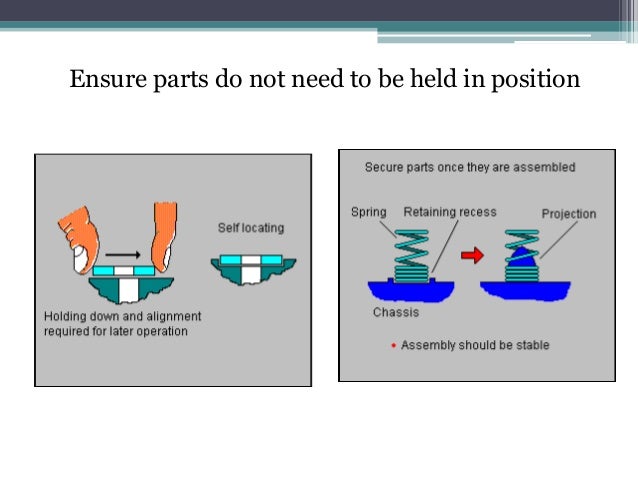
Design for assembly
Design for assembly is designing taking account of assembly at various levels, for example, component to component, components into sub-assemblies and sub-assemblies into complete products.

Image result for design for product assembly

Design for disassembly
Design for disassembly is designing a product so that when it becomes obsolete it can easily and economically be taken apart, the components reused or repaired, and the materials repurposed or recycled.

Sunday, January 13, 2019

9.3: Marketing Mix

9.3
Marketing Mix
Empathy for, and understanding of the target audience is developed through thorough analysis of the market chosen.

Concept:  A planned mix of the controllable elements of a product's marketing plan commonly termed as 4Ps; Product, Price, Place and Promotion. These four elements are adjusted until the right combination is found that serves the needs of the product's customers, while generating optimum income.

  • identified through market research 
  • provides the designer with an accurate and appropriate brief of market requirements


Marketing mix—the 4Ps: product, place, price, promotion
The 4P's:

  1. Product: standardization of products
  2. Place: implications of interest selling for a company in relation to its supply chain and distribution network
  3. Price: Cost-plus, demand pricing, competitor-based pricing, product line pricing, psychological pricing
  4. Promotion: advertising, publicity, personal selling.

Product: standardization of products
The process of setting generally uniform characteristics for a particular good or service. Product standardization among the goods provided by different businesses operating in technology based industries can be useful for consumers since it permits competition among the various suppliers


  • Standardization - different countries can have different standards for products eg. plugs, sockets, and voltage
GOVERNMENT STANDARDS
- Government sets standards for products. For example, in Europe the CE mark on electrical devices is a government regulated standard.
EU Standard
EU standard

COMPONENT STANDARDIZATION
- A part or component is standardized across products, such as USB ports or plugs.
USB Standards
USB Standards

INDUSTRY-WIDE STANDARDS
- certain industries have their own standards, such as the steel industry - they developed a limited range of sectional beams. This is more efficient and inexpensive compared to getting different types and sorts of sectional beams

Sectional beams for buildings

Place: implications of internet selling for a company in relation to its supply chain and distribution network
Where will this product be sold, geographically or physically? Online? Or in a store?

Many companies choose to sell directly to the consumer through the internet, while also selling suppliers and stores. There are advantages and disadvantages to both approaches, and also to using this hybrid model. Students need to consider the implications of internet selling for a company in relation to its supply chain and distribution network.


Strategies of setting price: cost-plus, demand pricing, competitor-based pricing, product line
An extremely important aspect of marketing: a product that has a price well fitted to it will attract consumers to make a purchase while generating profit.

  • Penetration
Low price to increase sales and market share
  • Competitor/Competition based pricing
Setting prices in comparison with competitors
  • Psychological pricing
Consider the psychology of the price eg $199 over $200 (effective with consumer decisions)
  • Cost plus
  • Product line pricing
  • Demand price/ Skimming

Image result for marketing pricing strategies
Types of Marketing Strategies


Promotion: advertising, publicity, personal selling
Promotion of the product can be achieved by using above and below the line methods to position the product and inform the current, potential or future consumer of its availablity. The aim of promotion is to most economically convert promotional investment and spending into actual sales. 


  • Above the line: costly advertising and can be any of the following: newspapers, billboards, magazines, radios, mobile media, paid internet adverts, flyer distribution, direct mail, direct selling and tv advertising (most expensive).
  • Below the line: more economical methods, such as public relations, point of sale displays, product packaging, distribution vehicle posters, window advertising, and emails (to name a few).

HELPFUL GUIDE TO THE 4P'S

Sunday, December 9, 2018

9.2: Market Sectors and Segments

9.2
Market Sectors and Segments
Essential idea: Designers must research and consider the target market sectors and segments in the design of their products.

By identifying the market sectors and segments a product will be designed for, a designer can gain data directly from the perspective of the potential consumer.

Categories of market sectors
Designers need to clearly be able to identify the needs of the target market and target audience. These can be classified into two categories:

  • Geographical sectors
Geographical sectors focus on the values, culture, and characteristics of purchasers in that region along with purchasing power.
  • Client-based sectors
Client-based sectors may focus on consumers, industrial, public sector and commercial.

You can divide a market sector into market segments, narrowing it down. Market segmentation: Markets divided in to smaller segments where purchasers have similar characteristics and/or tastes.

Screen Shot 2015-04-28 at 22.14.52
Market segmentation introduction

Why do we segment?
  • Increased understanding of customer wants and needs
  • Different products for different groups
  • Better match between customer wants and product benefits
  • Maximise the use of available resources
  • Focused marketing expenditures
  • Competitive advantages

The influence of market sectors
  •  if there is a technological advance then the products or services in that sector will change.
  • This change will influence the target markets.
  • Such as the size of microchips allowing for powerful portable devices leading to iPads and smartphones.

Classifications of consumer market segments: income, profession, age, family, values, behavior
Common segmentation variables for consumer markets:

  1. Geographic
    • Country
    • Region
    • City size
    • Density
    • Climate
  2. Demographic
    • Age
    • Gender
    • Family size
    • Life-cycle
    • Income
    • Education
    • Religion
    • Nationality
  3. Psychographic
    1. Social class 
    2. Lifestyle 
    3. Personality
  4. Behavioral
    1. Loyalty 
    2. Attitude
    3. Behaviors of customers
Image result for market segmentation

Types of Market Segments
  • Income (high, middle, and low levels of finance) 
For example, different cars are made for different types of customers. Eg. ' Daewoo and Corolla vehicles for price sensitive customers whereas Mercedes and BMW aim their cars at the more affluent.' 
Image result for budget car vs high end

  • Profession (types of jobs one has which can influence social groups or personal interest)
Different products apply to different professions, for example book genres.

  • Age (babies, toddlers, tweens, teenagers, young adults, middle aged to the elderly)
Differences in age would generate different products for their specific needs; such as diapers/nappies for babies, toys for children, clothes for teenagers

Related image

  • Family(single no kids, single with kids, married with two kids, empty nesters, etc.)
For example, a family with kids would purchase furniture that is more family orientated as opposed to a single living alone (trendy furniture).

Image result for ikea kids furniture
Ikea offers different types of furniture for different market segments.
Related image
  • Values (the ethical, worthiness or importance of something that is held by an individual or group, opinions)
Depending on the social demographic, people may have different environmental behaviors, eg buying environmentally friendly products vs a throw away society.

Image result for environmentally friendly society


Development of a product family
Product family: A group of products having common classification criteria. Members normally have many common parts, assemblies and/or aesthetic elements.   

Companies and designers will develop a successful product or product range into product families. This further develops a successful market segment that is already familiar with the original product. For example, iPod then iPhone, then iPad.


Designers often develop product families to extend a successful product range and to develop products for market segments that are already familiar with the original product.
Wednesday, December 5, 2018

4.4: Manufacturing Processes

4.4
Manufacturing Processes
Essential idea: Different manufacturing processes have been developed to innovate existing products and create new products.

Designers sometimes engineer products in such a way that they are easy to manufacture. Design for manufacture (DfM) exists in almost all engineering disciplines, but differs greatly depending on the manufacturing technologies used. This practice not only focuses on the design of a product's components, but also on quality control and assurance.

Additive Techniques
Paper-based rapid prototyping
PRP technology at the moment only used for for prototyping purposes and does not offer the same design freedom and strength as for example, a Selective Laser Sintered (SLS).

Image result for paper based rapid prototypingPaper Prototyping


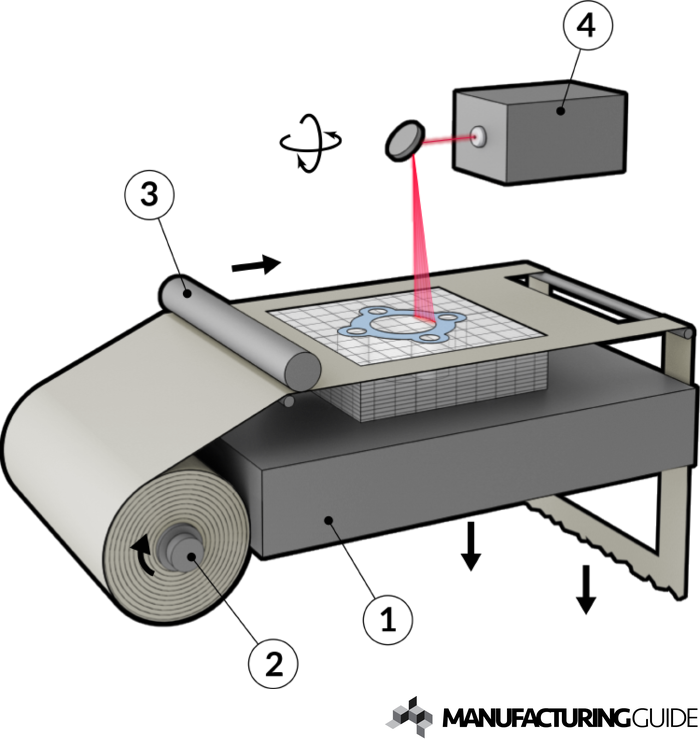
Laminated object manufacture (LOM)
LOM is used to make 3D paper/thin polymer models and is a form of 3D printing. It is often used for creating scale models and conceptual prototypes that can be tested for form or design. It can also be used to make patterns for use in traditional manufacturing, such as sand molded casting.

  • Materials include paper, plastic or metal
  • Design contexts include models, prototypes, vacuum forming molds, pattern (for casting), or one-off products.
Image result for laminated object manufacturing


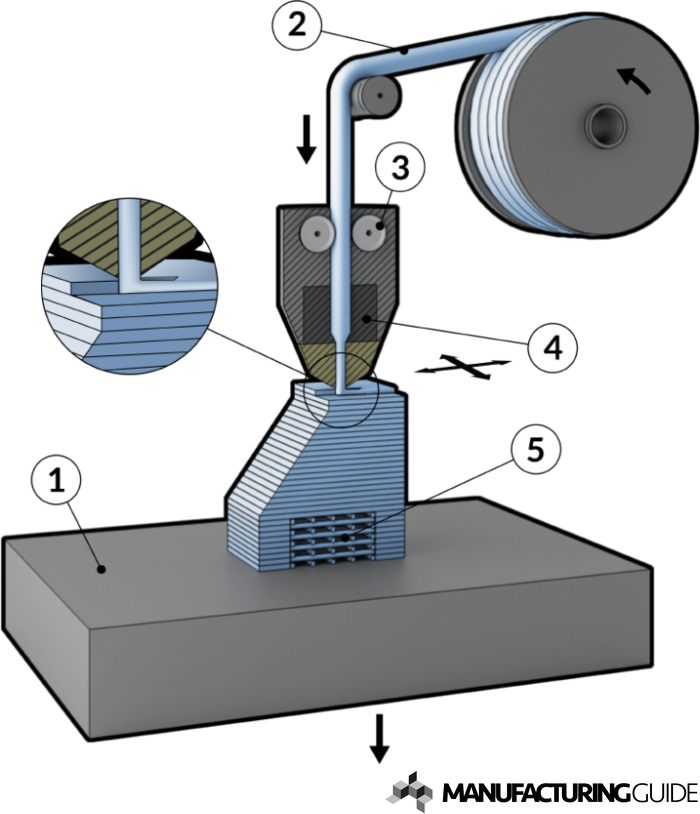
3D Printing and Fused Deposition Modelling (FDM)
Fused Deposition Modelling process constructs three-dimensional objects directly from 3D CAD drawings. A temperature controlled head extrudes thermoplastic material layer by layer.

  • Importing an STL file of a modelled into horizontal layers , which is then sliced into horizontal layers
  • The material used for objects 3D printed by an FDM would generally be PLA - less harmful to the environment, as it is made out of cornstarch. ABS is not as good for the environment because it is synthetically made.
The result of the solidified material laminating into the preceding layer is a plastic 3D model built up one strand at a time.

Image result for fused deposition modelingImage result for fused deposition modelling products


Stereolithography (SLA)
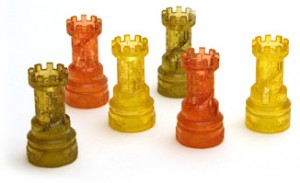
Stereolithography is an additive manufacturing technology that builds objects one layer at a time by curing a photo-reactive resin with a UV laser or other similar power source.

  • Type of liquid or polymer that reacts and hardens to the laser beam
  • Liquid material is hardened on contact
  • Laser builds from the bottom up

Image result for stereolithography
Image result for stereolithography products


Wasting/Subtractive Techniques
Manufacturing techniques that cut away material in order to create a component.

Cutting
Cutting describes the action sawing, chiseling, and planing which removes material in the process of cutting.
Band Saw
Band Saw
Hand Saws

Advantages
  • equipment and CNC have a high accuracy
  • equipment and CNC produce a high quality finish
  • produce very fine details
  • minimal distortion
Disadvantages
  • equipment and CNC initial costs are high
  • special training/skills are required
Machining
Powered machines that shape materials through a variety of cutting processes, machine tools operate on unfinished metal parts, such as rough metal castings or forgings, and perform shaping and finishing operations that produce precisely dimensioned parts. Most machine tools function in one or more several basic categories - drilling, turning, and milling.
Drill Press
Drill Press
Mill Machine
Mill machine

Advantages
  •  High accuracy can be achieved
  • equipment and CNC produce a high quality finish
  • produce very fine details
  • CNC/CAM allows for 24/7 production
Disadvantages
  •  equipment and CNC initial costs are high
  • special training/skills are required
  • less workers requires in a CNC/CAM work environment
Turning
Turning is most commonly carried out using a lathe or milling machine. Lathes are mostly used for cutting metals or woods. They work on a horizontal axes where the workpiece rotates at speed and tools such as chisels remove waste materials.


Abrading
Abrading involves the use of abrasive materials to wear away the material by friction. This can be done using abrasive papers (eg. sandpaper) or emery cloth. It could also involve the process of grinding use a wheel or abrasive stone. Synthetic materials such as silicon carbide, aluminum oxide or industrial diamond tipped tools can be used. As with cutting the tool must be harder than the material being cut or abraded.
Image result for abrading materials

Advantages
  • provides a good finish
  • takes sharp edges away – safety
  • Cheap shaping technique – relatively low capital cost
Disadvantages
  • can be noisy so health hazard
  • can be dusty so health hazard
Shaping Techniques
Moulding

Thermoforming

Laminating 

Casting

Knitting

Weaving

Permanent Joining Techniques
Fastening

Adhering 

Fusing

Temporary Joining Techniques

Sunday, December 2, 2018

9.1: Corporate Strategies

9.1
Corporate Strategies
Essential idea: Companies and businesses can utilize a range of different strategies to develop products, services, and systems.

Pioneering strategy
A pioneering strategy indicates a product led or technology led approach, in other words the product is being pioneered by a designer or design team and an associated manufacturer who may become a product champion. A pioneering style of approach to product design and development may be indicative of the use of new materials, production processes, or technology. 

Being the first to market with a new innovation
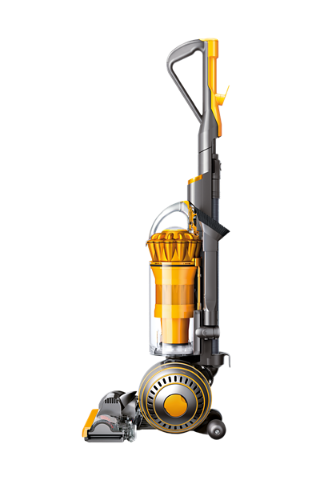
Image result for dyson vacuum
Dyson - new vacuum technology
ADVANTAGES - most risk, but highest potential for gains, need strong R&D (research and development)
DISADVANTAGES - risky, may not work. need a lot of money from extensive market research; risky and costly

Imitative strategy
An imitative strategy for a product designer /manufacturer would be to look at and thoroughly research existing products within a sector and use a very similar format (almost copying) for their won product development using similar technology, materials and production techniques. this approach enables the manufacturer to reduce design and development time and therefore cost.

Developing products that are similar to an existing new product.
REVERSE ENGINEERING is a process that imitative manufacturers use to extract knowledge or design information from products & systems and reproduce it. The process often involves dissembling something and analyzing its components and workings in detail.

Market development
This strategy involves looking at the existing market which a product ids placed in and then researching other markets or market segments that the product could be additionally placed in. The product may require minor adjustment or re-packaging. Research is required based around product analysis and consumer awareness.

Increasing sales to existing customers or finding new customers for an existing product.
Image result for starbucks stores
Starbucks - opening new stores around the world


Product development
This approach involves taking an existing product (maybe one you already produce or a competitors) and doing a significant product analysis and then changing the product or developing it to more appropriately fit a changing market. These could be minor or major design and functionality changes. 

The creation of new, modified or updated products aimed mainly at a company's existing customers.
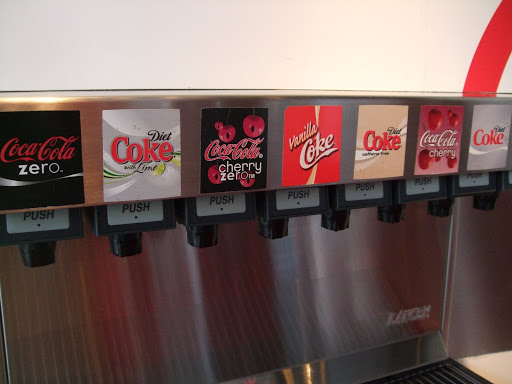
Variations to a product - Coca-Cola and its variations

Market penetration
Market penetration is a strategy which a business uses for existing products in current market. In this strategy there is no need to produce new products or offer products in new markets - the business will try to sell more products to existing consumers or find new consumers for their product which will increase their sales. 

Increasing sales to existing customers or finding new customers for an existing product. Selling more things

Trying to increase sales to customers that we already have


Product diversification
Increasing sales from new products or markets. Diversifying a product / product offerings

For example, Kelloggs, widely known for breakfast cereals diversified in the mid 80's into cereal snack bars, this meant they could sell a product that could be consumed at any time of the day without milk/bowl/spoon and the product is manufactured using the same or similar raw materials.


  • Involves a company both in the development of new products and in selling those products to new companies.
Ansoff Matrix

Hybrid approaches
Hybrid approaches is defined to be using more than one of the previously mentioned strategies in accordance with each other. In actuality, the majority of product developments that are brought to market evolve through elements of the sections listed previously. There is no exact formula than enables a product to succeed in the market, this is why new products from inexperienced designers and manufactures with low capital find it harder to enter significant markets which are already served by large manufacturers/suppliers.

Corporate social responsibility
This can be defined as the corporate belief or objective that a company needs to be responsible for tis actions, socially, ethically, and environmentally. Businesses will publish a CSR report, which describes its efforts in being economically, socially, and environmentally responsible (triple bottom line). 

Corporate social responsibility is a form of self-regulation for a company and centres around the development of goals related to three areas; social, economical, and environmental.

Companies that consider corporate social responsibility as a goal need to assess the impact of their operations in relation to these three areas in order to maximize the benefits and minimize the disadvantages. Students need to consider the ways in which a company might achieve this and the evidence of effective corporate social responsibility for a major multinational corporation.

Image result for csr reportImage result for csr report

Nike Sustainability Report
Coca-cola Sustainability Report
Lego CSR Report


3.3 Physical Modelling

3.3 Physical Modelling Essential Idea: A physical model is a three-dimensional, tangible representation of a design or system Designers ...